Our Community & Ecological Impact
How Karbharwadi became a model of agricultural innovation, economic resilience, and water conservation.
Farmer Families
Earning sustainable, above-market pricing from jaggery collective operations.
Water Conserved
Saved through centralized automated community drip irrigation.
Pure Organic
Bio-fertilizers and botanical extracts replace all toxic synthetic pesticides.
Income Growth
Average net income increase per household by bypassing APMC middlemen.
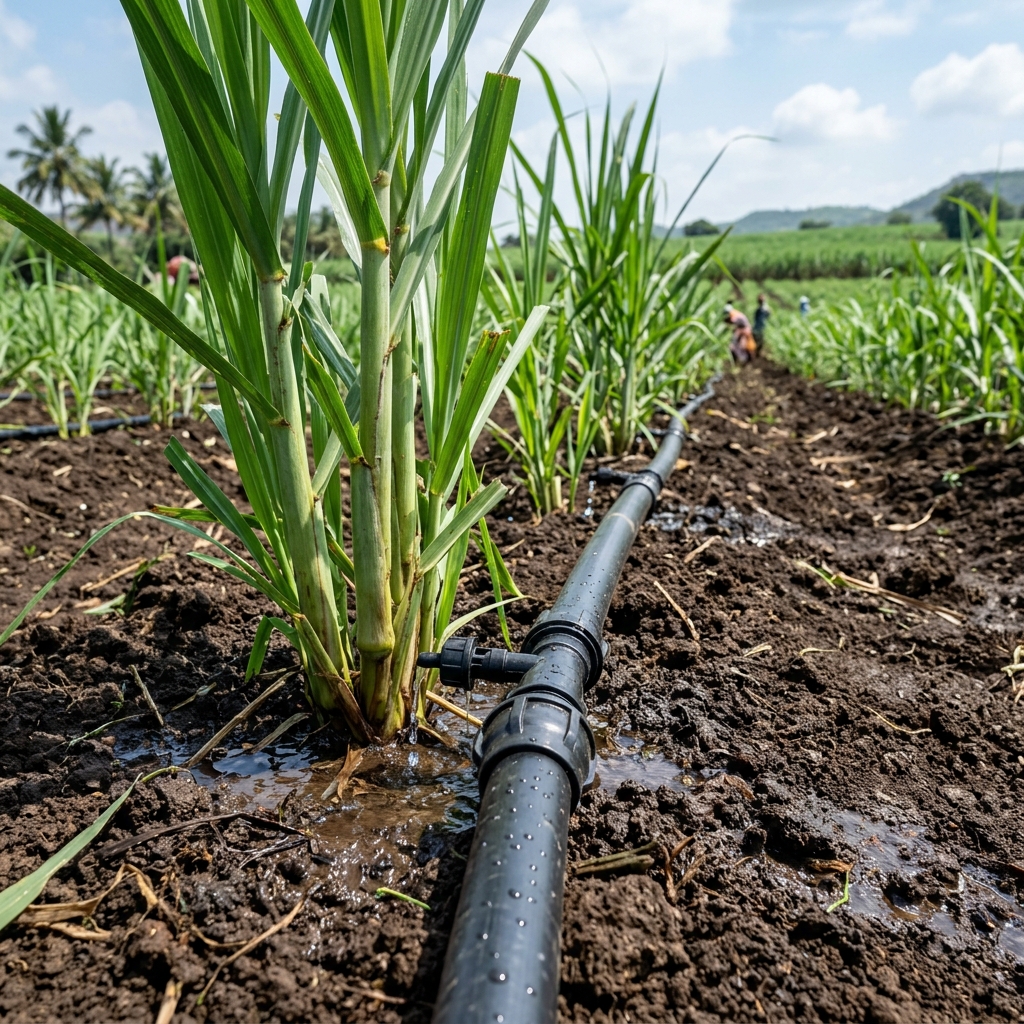
Centralized Automated Drip Irrigation
Sugarcane is traditionally a water-guzzling crop, reliant on flood irrigation. In Karbharwadi, the FPO organized a unified water-sharing collective.
Under Dr. Netaji Patil's guidance, the village installed a community-managed pipe distribution system fed by solar-pumped wells. The results: groundwater depletion reduced by 40%, weeds controlled naturally, and soil health preserved for future generations.
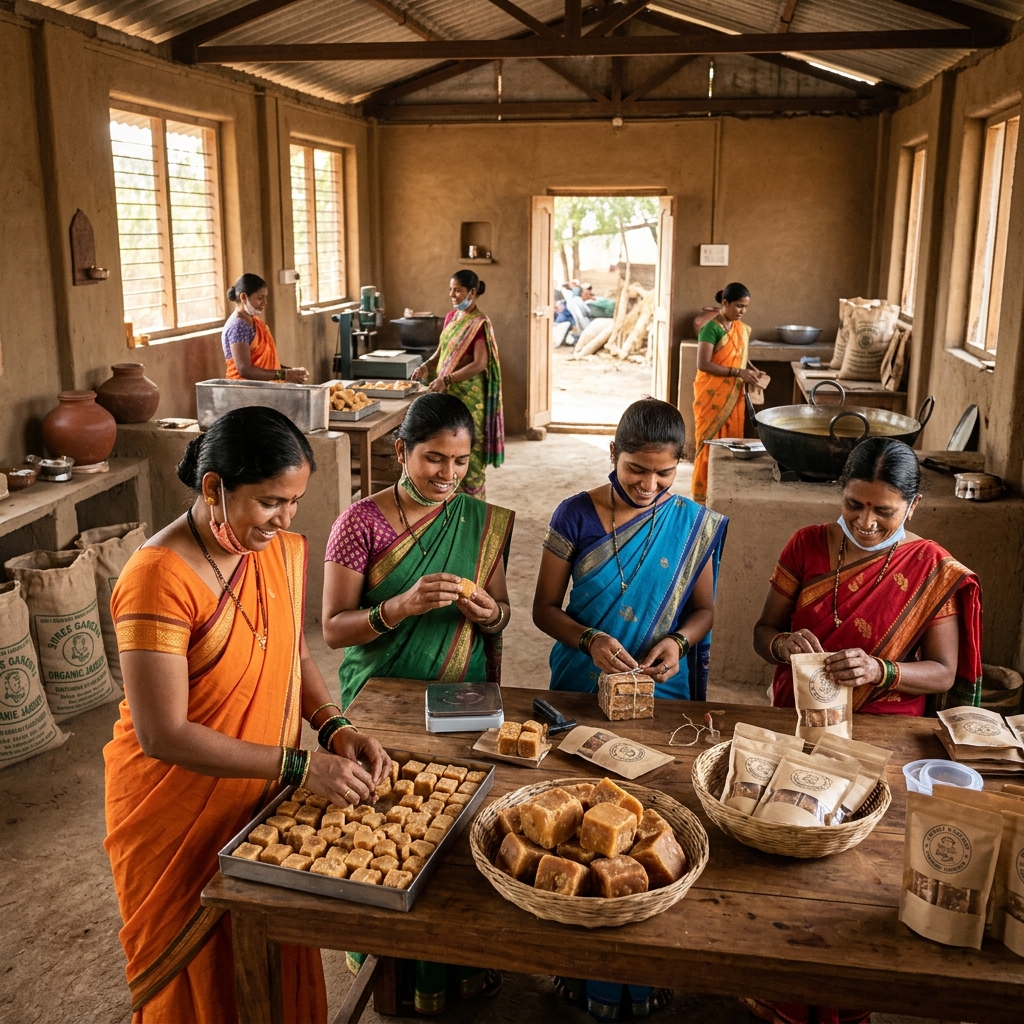
Women Self-Help Groups at the Core
While male members focus on sugarcane cultivation, local women manage processing, sorting, quality control, and packing of jaggery bars, cubes, and powders.
Over 40% of all processing wages go directly to women, fostering financial independence and giving women a major voice in the Farmer Producer Company's governance.
Recognized by the District Collector
Kolhapur District Collector Rahul Rekhawar visited Karbharwadi to inspect the sustainable community irrigation model, inaugurate the “Karbhari Godva” jaggery processing unit, and praise Krushi Sarthi as a scalable template for rural village development.
“The cooperative water sharing, high-tech greenhouses, and clean, organic processing unit run by local women SHGs at Karbharwadi is a benchmark. It is a model that other talukas must replicate.”
Rahul Rekhawar
District Collector, Kolhapur